
By Dr. Daniyar Kaldiyarov
Eurasian Institute for Interdisciplinary Studies, Almaty, Kazakhstan
Secondment at Marmara University, Istanbul, Turkey (01 February 2024 – 14 January 2025)
When I first arrived in Istanbul in February 2024, I was greeted not only by the sound of ferries crossing the Bosporus and the echo of street vendors calling in Turkish and Arabic, but also by a deep sense of curiosity. I had come to Turkey for a 12-month secondment at Marmara University as part of the MOCCA Project — Multilevel Orders of Corruption in Central Asia, a research initiative funded by the European Commission (Horizon Europe MSCA-SE).
As a researcher from the Eurasian Institute for Interdisciplinary Studies in Almaty, Kazakhstan, my aim was clear: to explore the connections between corruption, institutions, and access to infrastructure in Kazakhstan. Yet, the experience that unfolded in Istanbul became far more than a research project — it was an immersion into comparative governance, academic collaboration, and cultural dialogue that reshaped my understanding of both corruption and reform.
Setting the Scene: Research Aims and Questions
My research project, “Corruption in Context: Institutions, Infrastructure and Economic Development,” sought to uncover how institutional quality and infrastructure distribution affect corruption patterns in Kazakhstan.
The central question driving my study was:
How do institutional imperfections and unequal access to infrastructure sustain corruption as a social norm rather than an exception?
To answer this, I combined methods from institutional economics, political-legal analysis, and empirical sociology. The project relied on survey and interview data from multiple regions of Kazakhstan, focusing on how citizens perceive corruption in everyday interactions with public infrastructure — from water supply and roads to education and digital services.
This research formed part of the broader MOCCA project’s ambition to develop comparative, context-sensitive understandings of corruption in Central Asia — a region where historical legacies, informal practices, and modernization processes often intersect in complex ways.
Academic Life at Marmara University
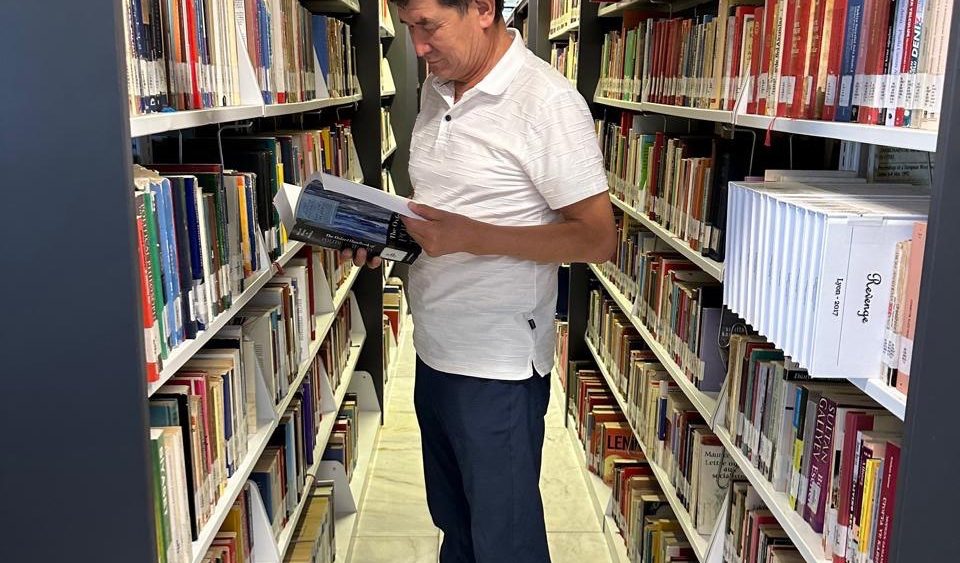
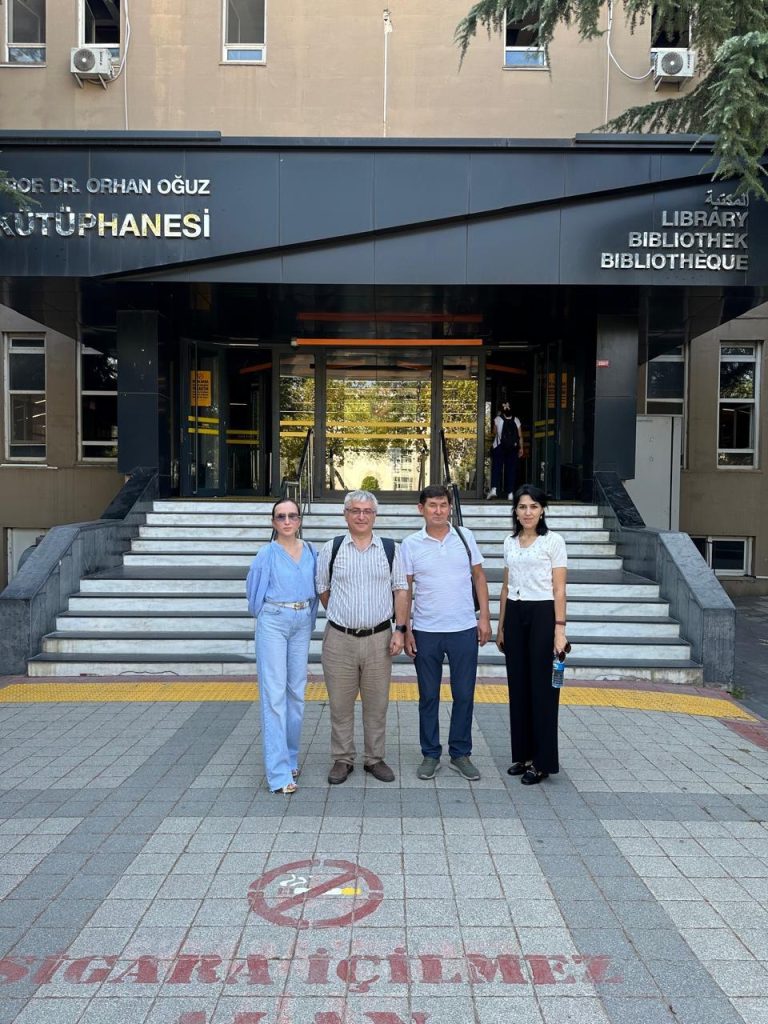
Marmara University, with its strong tradition in political science, law, and economics, provided an ideal environment to advance this research. The Department of Political Science — where I was hosted — offered access to seminars, interdisciplinary working groups, and mentorship that strengthened both the conceptual and methodological foundations of my study.
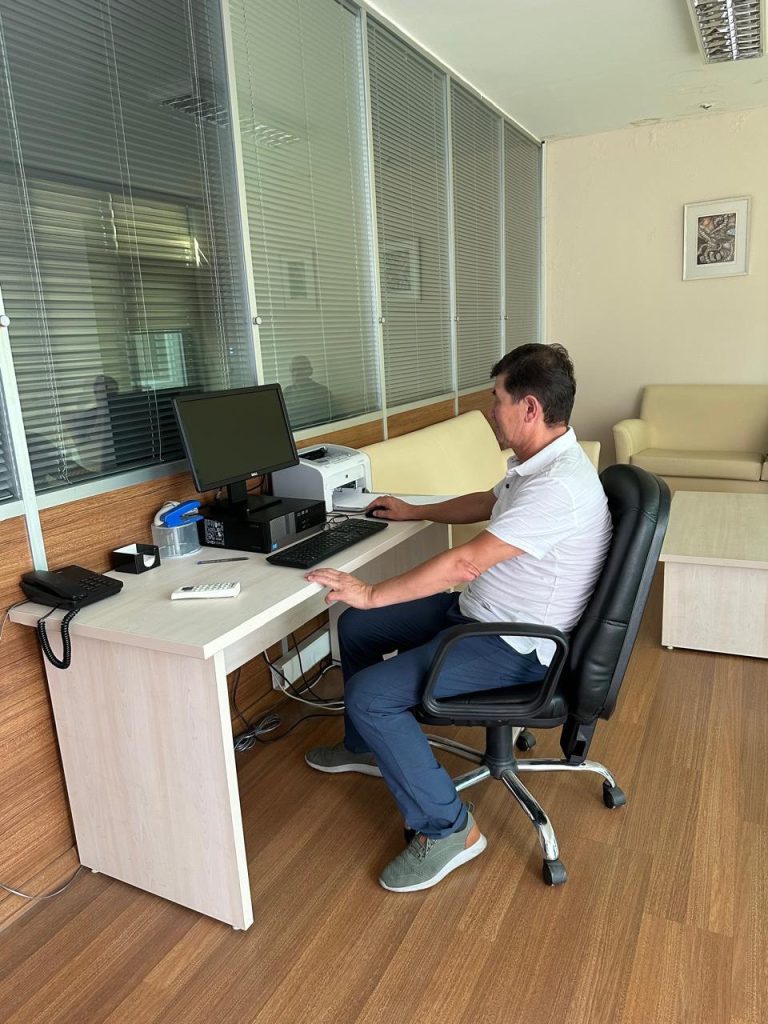
Thanks to the generous support of my host Prof. Erhan Dogan, I was able to dedicate a full year of uninterrupted research time — something few researchers in active institutions can afford. This period allowed me to revise theoretical frameworks, refine the empirical design, and finalize the manuscript that eventually became a book.
During my stay, I presented my work in departmental seminars attended by graduate students and faculty. Discussions were vibrant and comparative: colleagues often related the Kazakhstani experience to Turkish debates on transparency, governance, and the role of informal networks in public life. These exchanges illuminated the universality of corruption as a challenge — transcending national boundaries but shaped by local institutions and culture.
I also participated in MOCCA’s methods workshop, “Fieldwork and Data Collection Strategies in (Anti-)Corruption Research” (February 2024), where researchers from across Europe and Central Asia discussed best practices for data gathering in politically sensitive contexts. This dialogue helped refine the methodological rigor of my fieldwork in Kazakhstan.
Living and Learning in Istanbul
Beyond academia, living in Istanbul was itself an education in complexity and continuity. Few cities illustrate the interplay between tradition and modernization as vividly as this one. Every walk from Kadıköy’s university quarter to the old Ottoman streets of Üsküdar offered a tangible metaphor for my research: how societies manage continuity in the face of transformation.
The experience of navigating Istanbul’s diverse social and administrative systems gave me practical insights into comparative institutional dynamics. I observed how Turkey’s reforms in digital governance — including e-government services and smart infrastructure systems — have reduced bureaucratic opacity. These reforms offered valuable parallels and policy lessons for Kazakhstan, where similar digital transitions are underway but remain uneven across regions.
Life in Istanbul also nurtured personal growth. The city’s cosmopolitan atmosphere, multiculturalism, and vibrant intellectual life encouraged constant reflection. Conversations with Turkish colleagues, local civil servants, and international researchers broadened my perspective on corruption not just as an economic or legal issue, but as a cultural and institutional phenomenon intertwined with daily life.
From Research to Publication: Corruption in Context
The most tangible academic outcome of my secondment is the publication of the book Corruption in Context: Institutions, Infrastructure and Economic Development, co-authored with Dr. Dinara Rakhmatullayeva and published by Media-Tryck, Lund University (2025).
The book represents a culmination of years of research and the intellectual environment fostered during my stay in Istanbul. It examines corruption as a systemic, institutionalized phenomenon rather than isolated acts of misconduct.
Key Insights from the Study
- Institutional Traps and Corruption Persistence
In Kazakhstan and other post-Soviet contexts, weak enforcement mechanisms and social norms sustain “institutional traps” — situations where corrupt practices become rational strategies for survival. - Infrastructure Inequality as a Catalyst for Corruption
Disparities in access to infrastructure — whether roads, energy, digital networks, or healthcare — create conditions where officials can exploit scarcity for personal gain. The study demonstrates how infrastructure bottlenecks often turn into arenas for informal exchanges. - Societal Attitudes and Tolerance
Survey data revealed that while citizens condemn corruption in principle, they often perceive it as unavoidable in practice. This duality reflects low institutional trust and a culture of pragmatic adaptation. - Digitalization and Reform
Digital governance tools, when properly implemented, have the potential to disrupt informal rent-seeking patterns. However, technological reform must be accompanied by civic participation and accountability mechanisms to ensure long-term impact.
The interdisciplinary approach — combining economic modelling, institutional theory, and sociological fieldwork — distinguishes the book from conventional corruption studies. It is both a diagnostic tool for understanding corruption’s roots and a policy blueprint for designing context-sensitive reforms.
Presenting Findings on an International Stage: MOCCA Mid-Term Conference
In May 2025, a few months after completing my secondment, I had the honor of presenting our joint paper “Corruption and Access to Infrastructure: A Sociological Study in Kazakhstan” at the MOCCA Mid-Term Conference hosted by Lund University, Sweden.
Our presentation formed part of Panel 1: Corruption, Informality and Social Norms, alongside contributions from colleagues in Uzbekistan, Kazakhstan, and Turkey. We examined the relationship between infrastructural scarcity and everyday corruption, demonstrating that sectors such as land allocation, utilities, and digital access are among the most vulnerable to informal payments and favoritism.
Engagement with fellow MOCCA researchers provided valuable comparative perspectives. For instance, participants from Uzbekistan and Kyrgyzstan highlighted similar patterns in their own countries — where rapid modernization has outpaced institutional reform, creating new “grey zones” of informal governance.
The conference reinforced the MOCCA project’s core vision: that combating corruption in Central Asia requires an understanding of local norms, informal institutions, and cross-regional dynamics, rather than the mere transplantation of Western legal models.
Personal and Professional Transformation
Looking back, this secondment transformed not only my research but also my worldview.
Academically, it strengthened my ability to integrate quantitative and qualitative data within a coherent institutional framework. Collaborating with European and Turkish scholars expanded my methodological repertoire and introduced me to new approaches to cross-cultural fieldwork ethics.
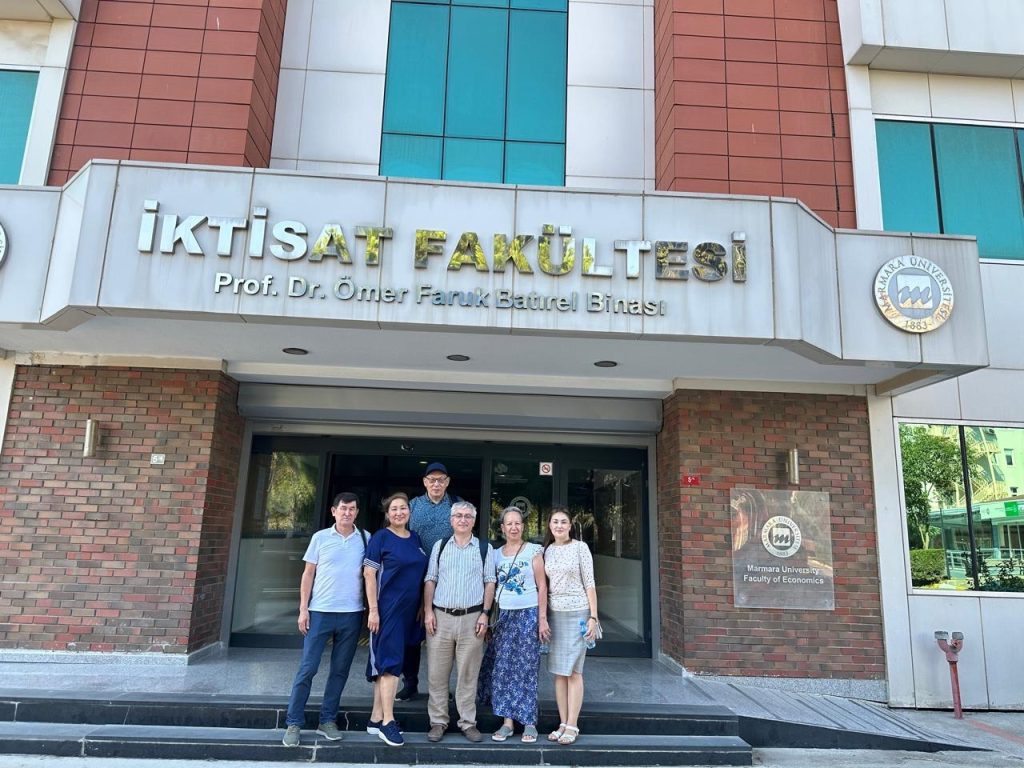
Professionally, it deepened institutional ties between the Eurasian Institute for Interdisciplinary Studies and Marmara University, paving the way for future joint workshops and student exchanges.
Personally, it reminded me of why research matters. Understanding corruption is not an abstract exercise; it is about diagnosing real obstacles to human development, equity, and public trust.
Returning to Almaty: Sharing Knowledge and Building Capacity
Upon returning to Kazakhstan in early 2025, I organized a series of seminars and workshops at my home institution to disseminate insights gained during the secondment.
One workshop focused on empirical tools for studying corruption, introducing young researchers to field survey design, data visualization, and ethics in sensitive research. Another event — inspired by Turkey’s digital governance experience — explored how e-government platforms could enhance transparency in Kazakhstan’s public procurement systems.
The goal of these activities was twofold:
- To translate academic findings into practical discussions relevant to policymakers and civil society; and
- To empower early-career researchers to adopt interdisciplinary perspectives in studying governance and development.
Through these knowledge-sharing initiatives, the spirit of MOCCA continues to thrive beyond its European network — reinforcing a regional community of inquiry that is both locally grounded and internationally connected.
Reflections on the MOCCA Experience
The MOCCA project stands out not only as a research consortium but also as a collaborative ecosystem. It fosters open dialogue between disciplines — law, economics, sociology, and anthropology — and encourages scholars to engage with both theory and lived realities.
My year at Marmara University confirmed that the study of corruption cannot be reduced to compliance checklists or legislative reforms alone. It requires understanding the cultural logic and institutional incentives that shape human behavior.
Equally important, the project demonstrated that academic mobility is a catalyst for innovation. Being immersed in another academic culture allowed me to question assumptions, test new ideas, and view Kazakhstan’s institutional challenges through a comparative lens.
As I reflect on this journey, I am convinced that the success of projects like MOCCA lies not only in their scientific outputs but in their capacity to build networks of trust and shared learning across borders.
A City that Mirrors the Research
It would be impossible to conclude without mentioning the profound influence of Istanbul itself. The city’s rhythm — between the structured and the spontaneous, the historical and the modern — mirrors the very dualities explored in my research.
Watching the sun set over the Bosporus, where Europe and Asia meet, I often thought about the symbolic relevance of Istanbul to the MOCCA project. It stands at the crossroads of civilizations, just as Central Asia stands at the crossroads of institutional legacies and global transformations.
In many ways, Istanbul taught me that corruption research, too, is about crossings — between disciplines, between cultures, and between the ideals of transparency and the realities of governance.
Acknowledgements
This journey would not have been possible without the support and mentorship of many colleagues. I wish to express my deep gratitude to:
- The faculty and staff of Marmara University’s Department of Political Science, spcifically Prof. Erhan Dogan, for hosting me so warmly and for his invaluable feedback on my research;
- Dr. Dinara Rakhmatullayeva, my co-author and collaborator, for her commitment, insight, and friendship throughout the project; and
Looking Ahead
As I continue my work in Almaty, I see the next phase of my research focusing on digitalization, institutional reform, and civic engagement as interconnected tools for anti-corruption. The empirical findings from our book open new avenues for comparative studies across Central Asia, particularly in understanding how local innovations in governance can complement international frameworks.
In the coming years, I hope to strengthen collaboration between Kazakhstani and Turkish scholars through joint publications, student training, and regional policy dialogues — building on the academic bridges first established during my secondment.
Final Thoughts
The MOCCA secondment at Marmara University was more than a professional assignment; it was an experience that transformed ideas into action, and research into connection.
It reaffirmed my belief that tackling corruption demands more than punishment or compliance — it demands understanding, dialogue, and institutional empathy.
In Istanbul, I found all three.