

By Dr. Daniya Nurmukhankyzy, Professor of Law, Zhetysu University (Kazakhstan)
Setting Out on a Journey of Knowledge and Discovery
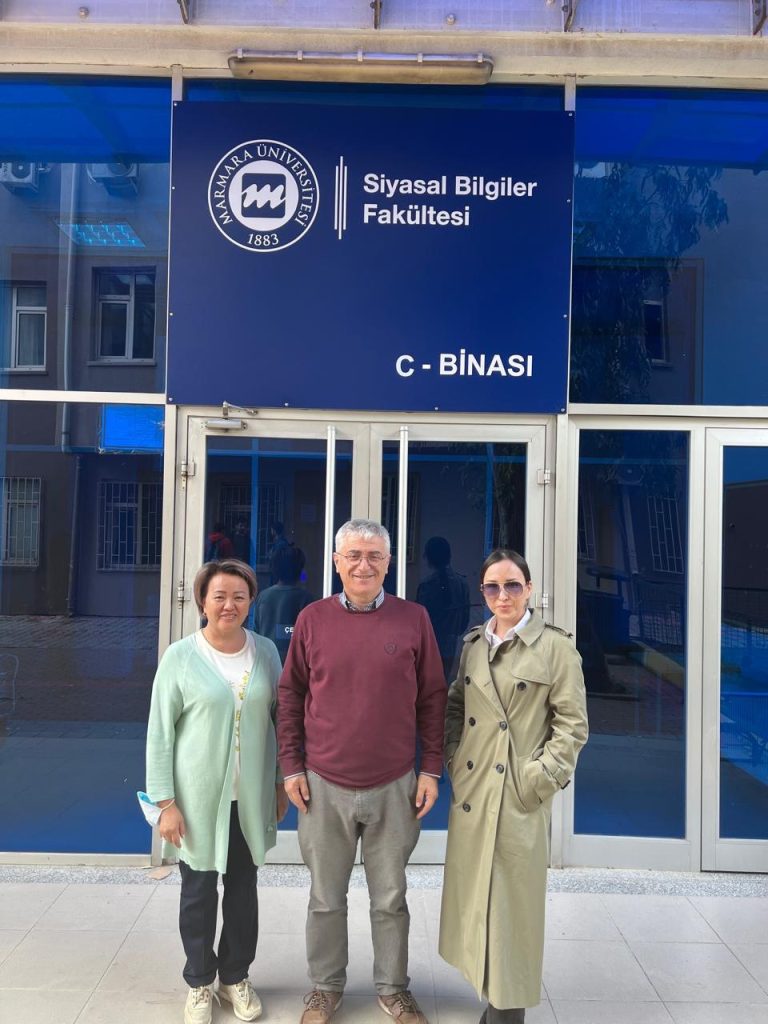
In August 2023, I embarked on a journey that would deeply shape my academic and personal perspectives. For twelve months, divided between two periods (August–December 2023 and February–September 2024), I conducted a secondment at Marmara University in Istanbul, Turkey, as part of the MOCCA project — Multilevel Orders of Corruption in Central Asia (HORIZON MSCA-SE-2021, Project No. 101085855).
As a Professor of Law at Zhetysu University in Kazakhstan, I had long been interested in the legal dimensions of governance and the subtle interplay between law and society in post-Soviet states. The secondment at Marmara University provided a rare opportunity to dedicate myself fully to research while engaging in an international scholarly dialogue about corruption, lawmaking, and institutional reform.
The objective of my stay was to work on a comprehensive comparative study titled “Anti-Corruption Examination of Normative Legal Acts in Kazakhstan and Uzbekistan: A Comparative Legal Analysis.” This project explores how preventive legal mechanisms—particularly the anti-corruption examination of laws—function in two Central Asian states that share common roots yet have developed distinct legal trajectories since independence.
Istanbul: A City of Contrasts and Inspiration
Arriving in Istanbul felt like entering a living textbook of civilization. Every corner of the city—where the minarets meet the skyline and the call to prayer merges with the hum of daily life—reminded me that law and culture are inseparable.
Marmara University offered an exceptionally supportive environment. The Department of Political Science and Prof. Erhan Dogan provided not only access to excellent resources but also an inspiring academic community. Discussions with Turkish colleagues on topics such as administrative law, ethics, and public accountability helped me place my Central Asian research in a broader comparative framework.
Beyond academia, Istanbul itself taught lessons that no textbook could convey. Observing how a society balances modern governance with centuries-old traditions made me more sensitive to the ways legal norms interact with culture and values. The experience reaffirmed my belief that effective legal reforms are never purely technical—they require cultural resonance and public trust.
Understanding the Project: Anti-Corruption Examination as a Preventive Tool
At the heart of my research lies the concept of anti-corruption examination of normative legal acts—a preventive legal instrument designed to detect corruption risks at the lawmaking stage. The mechanism requires experts to review draft laws and regulations to ensure that their provisions do not unintentionally create opportunities for favoritism, excessive discretion, or abuse of power.
In Kazakhstan, this institution was first introduced in the late 2000s as part of the country’s broader anti-corruption agenda. It aimed to bring transparency to rulemaking by subjecting legal drafts to independent expert review. However, the system went through a turbulent evolution: after being institutionalized in 2009, it was abolished in 2014 and later revived in 2020 following President Tokayev’s call to restore this preventive tool.
Meanwhile, Uzbekistan followed a different trajectory. After decades of limited reforms, the country undertook a comprehensive modernization of its legal framework beginning in 2016. By 2023, Uzbekistan adopted a specialized law on anti-corruption examination—making it one of the few post-Soviet states with a fully codified and mandatory procedure for assessing corruption risks in both draft and existing legislation.
Through this comparative lens, I sought to understand not only how these systems operate on paper but how they function in practice—how laws meant to fight corruption sometimes become, paradoxically, absorbed into the very bureaucratic routines they are meant to reform.
In Kazakhstan, experts often pointed out that while the process is officially transparent—their conclusions are published online through the Saraptama portal—many of their recommendations remain advisory and are not always adopted by state bodies. Some respondents noted that draft laws are submitted for examination more to fulfill a procedural requirement than to genuinely evaluate corruption risks.
In Uzbekistan, by contrast, the procedure is embedded directly within government structures: ministries’ legal departments and the Ministry of Justice conduct mandatory reviews. This ensures coverage but sometimes limits independence. Experts described the system as efficient in form but not always in substance, since the same administrative hierarchies that generate corruption risks can also constrain critical analysis.
Both countries, despite different models, face a similar paradox: the coexistence of formal legal progress with informal political realities. This duality—so characteristic of post-socialist governance—became the conceptual core of my chapter.
Findings and Reflections: Between Formality and Reform
The research demonstrates that anti-corruption examination, in both Kazakhstan and Uzbekistan, operates as a hybrid institution—combining genuine preventive ambitions with elements of bureaucratic formalism.
In Kazakhstan, the strength of the model lies in its scientific independence and public accessibility, but its weakness lies in the limited power of expert conclusions. In Uzbekistan, the advantage is legal comprehensiveness and institutional coordination, yet transparency and external oversight remain constrained.
For instance, in one Kazakhstani case, experts identified corruption risks in healthcare procurement rules that required ambiguous “written confirmations” from landlords—creating opportunities for arbitrary interpretation. Their recommendations were clear, yet not all were accepted. In another case, concerning refugee status regulations, expert comments pointing to conflicts with international law were formally acknowledged but ultimately disregarded in the final draft.
These examples illustrate that the real effectiveness of anti-corruption examination depends less on methodology and more on political will, accountability, and openness to expert advice.
The broader implication of my findings is that anti-corruption examination reflects the state’s approach to governance itself. When treated seriously, it becomes a meaningful preventive mechanism contributing to good governance. When applied formally, it risks becoming a ritual that legitimizes existing power structures without challenging them.
Participating in the MOCCA Methods Workshop (February 2024)
A highlight of my secondment was participating in the MOCCA Mid-Term Meeting and Methods Workshop, held from February 2–5, 2024, at Marmara University in Istanbul. The event gathered MOCCA researchers from across Europe and Central Asia to exchange experiences, discuss fieldwork challenges, and refine methodological approaches to studying corruption and informality.
On February 5, I had the honor of presenting my paper “Anti-Corruption Assessment and Expert Evaluation of Laws in Kazakhstan”. In this presentation, I discussed the institutional evolution of anti-corruption examination in Kazakhstan, highlighting its scientific basis, methodological challenges, and role in fostering transparency and accountability in lawmaking.
The workshop provided a unique platform for interdisciplinary exchange. Discussions with researchers from different disciplines—sociology, political science, anthropology, and economics—helped me situate my legal analysis within a broader socio-political framework. It was both intellectually stimulating and personally enriching to see how our diverse perspectives converged on a shared goal: understanding and combating corruption in complex, transitional societies.
The Human Dimension of Research
Research is often imagined as an abstract pursuit of knowledge, but my time in Istanbul reminded me that it is also a profoundly human experience. It was in informal discussions with colleagues, over Turkish tea or during university seminars, that some of the most stimulating ideas emerged.
I was fortunate to present parts of my research at Marmara University’s Department of Political Science, where the audience of graduate students and faculty engaged in thought-provoking dialogue about corruption prevention, informal institutions, and the role of law in transitional societies. These conversations offered fresh comparative insights—especially as Turkey’s own experiences with legal reforms and governance have much to teach Central Asia.
Living abroad also required adapting to a different academic culture. I learned to appreciate the diversity of approaches to teaching, publishing, and mentorship. Turkish academia, with its mix of European, Middle Eastern, and local intellectual traditions, provided a fertile ground for creative thinking.
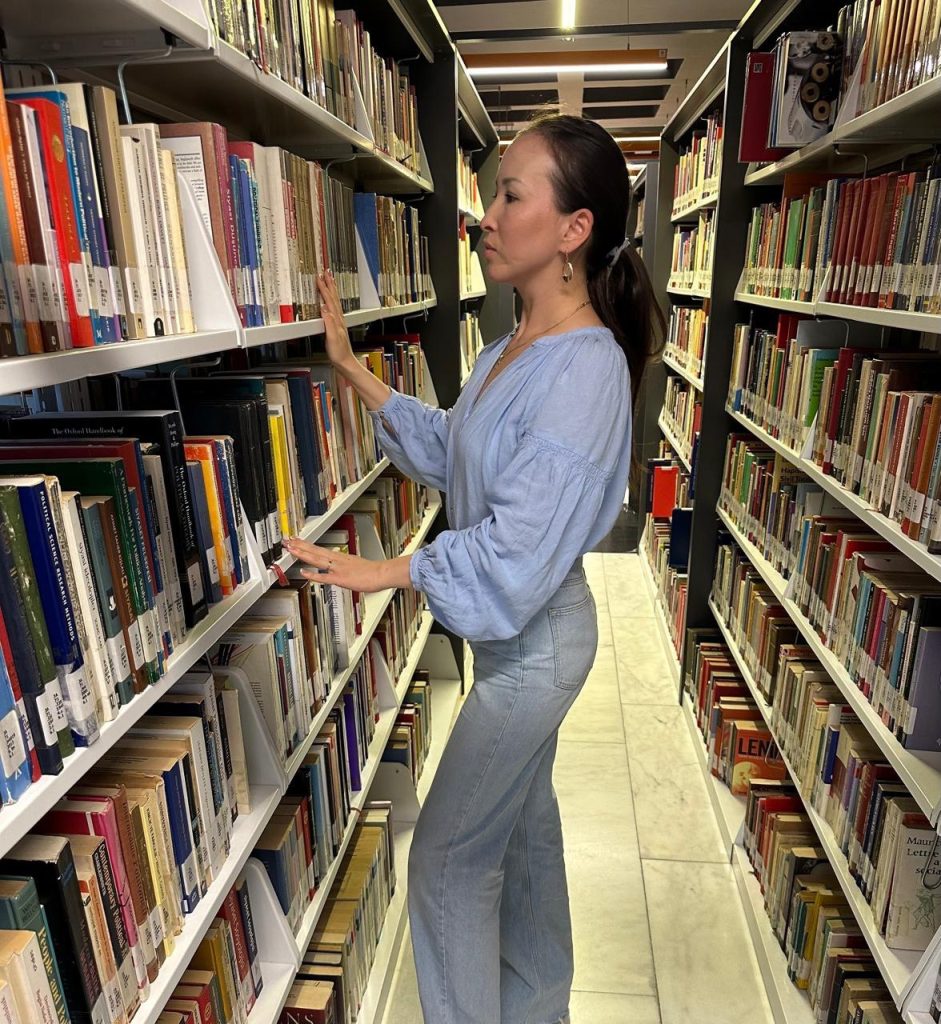
Personally, I found Istanbul to be an endless source of inspiration. Whether reading manuscripts in the quiet library of Marmara University or writing notes in a café overlooking the Golden Horn, the city’s layered history constantly reminded me of the continuity between past and present—between law as an institution and law as a living narrative.
MOCCA and the Value of Academic Mobility
The MOCCA project, involving the collaboration of European and Central Asian universities, has created a unique platform for interdisciplinary research on corruption, governance, and legal transformation. For me, the project’s greatest value lies in its community of scholars—a network that bridges law, sociology, and political science across different regions.
The secondment allowed me to concentrate exclusively on my research while engaging in intellectual exchanges that would have been impossible within the confines of a national academic environment. It strengthened my competencies in comparative research, qualitative methodology, and cross-cultural collaboration.
Importantly, it also reaffirmed the importance of mobility in academia. Stepping outside one’s home institution offers not just access to new resources, but also the chance to see one’s field from a fresh perspective. For a legal scholar from Kazakhstan, studying in Turkey—a country that straddles East and West, tradition and modernity—was particularly illuminating.
Looking Forward: From Research to Reform
After returning to Zhetysu University, I shared the insights gained during this secondment with my students and colleagues. I organized workshops on anti-corruption law and public ethics, integrating comparative perspectives from both Kazakhstan and Uzbekistan.
I also contributed to policy discussions on improving the scientific anti-corruption examination system in Kazakhstan, advocating for greater transparency in how expert recommendations are incorporated into lawmaking. In collaboration with MOCCA partners, I hope to continue developing comparative research that bridges empirical findings with normative reform agendas.
I presented my findings at the MOCCA Mid-Term Conference in Lund, Sweden (May 2025), as part of the panel “Corruption in Non-Western Societies: Insights from Central Asia.” The dialogue between scholars from Europe and Central Asia served to deepen our understanding of how anti-corruption mechanisms evolve across different institutional settings.
A Personal Reflection
When I think of Istanbul now, I remember not only the grandeur of its mosques or the sparkle of the Bosphorus at sunset, but also the quiet sense of purpose that filled my days there. Every page I wrote, every discussion I had, felt connected to a larger vision—the belief that law can be a force for integrity and justice, even in imperfect systems.
My secondment reminded me that research is not just about gathering data or writing analyses. It is about building bridges—between countries, between disciplines, and ultimately, between ideals and practice. The experience has deepened my conviction that comparative law is not only an academic pursuit but a pathway to mutual understanding and collective progress.
Acknowledgments
I am deeply grateful to Marmara University for hosting me with generosity and intellectual openness; to my colleagues and students at Zhetysu University for their continued support; and to the European Commission’s Horizon MSCA programme and MOCCA project coordination team at Lund University for making this exchange possible.
Finally, I thank the many experts and practitioners in Kazakhstan and Uzbekistan who shared their knowledge and experiences—without their insights, this research would not have been possible.
Dr. Daniya Nurmukhankyzy
Professor of Law, Zhetysu University, Kazakhstan
MOCCA Research Fellow at Marmara University, Istanbul